


Silicone Fetish: Skin Imitation, Artificial Bodies, and Hyperreal Desire
Silicone does not simply replicate the body; it simulates it with an unsettling precision.
Unlike materials that transform or abstract the human form, silicone operates in the opposite direction, moving toward imitation, toward a surface that appears almost indistinguishable from skin, yet remains fundamentally artificial. It exists within a threshold where realism becomes ambiguous, where touch, sight, and expectation begin to overlap in ways that are difficult to separate.
Within fetish contexts, this ambiguity becomes central, as silicone objects do not conceal the artificial, but intensify it through realism, creating a form of desire that is shaped not by distance from the body, but by proximity to it.
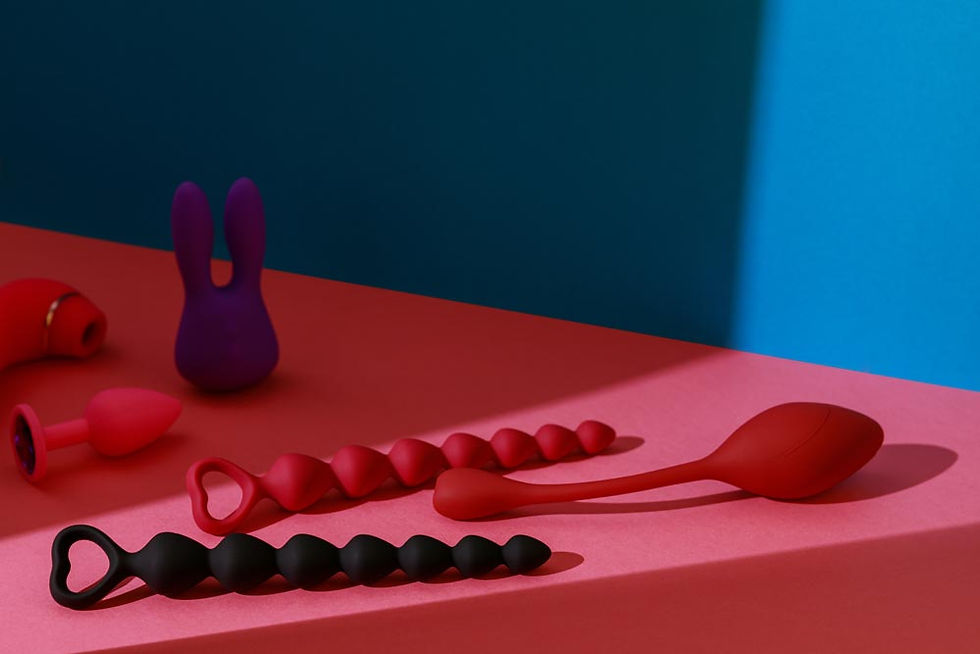
Photography: Envato Elements
The Surface of Imitation
Silicone’s defining quality lies in its ability to reproduce the texture and visual qualities of skin with a level of accuracy that feels immediate and convincing.
Its softness, elasticity, and subtle resistance create a tactile experience that mirrors the organic, while its matte or semi-translucent surface reflects light in a way that suggests depth rather than flatness. This combination produces a material that does not read as entirely artificial, yet never fully escapes its constructed nature.
The result is a surface that exists in tension, where recognition and doubt coexist, and where the body is both present and absent at the same time.

Hyperreal Aesthetics
Silicone belongs to a category of materials often described as hyperreal, where imitation exceeds simple representation and moves into a space of intensified realism.
This hyperreality does not aim for perfection, but for believability, capturing details that suggest life without fully reproducing it. Slight imperfections, variations in tone, and subtle shifts in texture all contribute to this effect, creating an object that feels convincingly real while remaining unmistakably artificial.
Within fetish aesthetics, this hyperreal quality introduces a unique dynamic, where desire is directed toward something that is both familiar and constructed, both intimate and distant.
The Body as Object, the Object as Body
Silicone fetish objects blur the boundary between subject and object in a way that few materials can.
By replicating aspects of the human body, they transform objects into representations of form, while simultaneously reducing the body to something that can be reproduced, segmented, and reassembled. This dual movement — object becoming body, body becoming object — creates a conceptual loop in which identity and materiality are continuously exchanged.
In this space, the distinction between original and replica becomes less relevant than the experience itself, where the object functions as both reference and presence.
Touch, Perception, and Material Illusion
The experience of silicone is not purely visual; it is deeply tied to touch.
The material responds to pressure with a softness that mimics organic resistance, creating a sensory feedback that reinforces its realism. This interaction produces a form of material illusion, where the body responds to the object as if it were natural, even while recognizing its artificiality.
This dual awareness — knowing and feeling — creates a layered experience, where perception is constantly negotiating between reality and simulation.
Control, Distance, and Substitution
Silicone objects introduce a form of control that differs from other fetish materials.
Rather than reshaping or restraining the body, they provide a substitute, a stand-in that allows for interaction without the presence of another individual. This substitution creates a controlled environment, where variables are reduced and outcomes are predictable.
At the same time, this control introduces distance, as the object, despite its realism, cannot fully replicate the complexity of the human body. This gap between imitation and reality becomes part of the experience, reinforcing the artificial nature of the interaction.
Cultural Context and Hyperreal Bodies
The presence of silicone extends beyond fetish contexts into broader cultural spaces, including film, art, and design, where hyperreal representations of the body are explored as both aesthetic and conceptual objects.
In these contexts, silicone is used to question the boundaries between natural and artificial, between original and copy, reflecting a broader cultural fascination with replication and simulation. Within fetish culture, these same themes are engaged more directly, as the material becomes part of a personal and sensory experience.
This overlap reinforces the idea that silicone fetish objects are part of a larger conversation about the nature of reality, representation, and the body itself.
Why Silicone Fetish Persists
Silicone fetish persists because it operates at the edge of recognition.
It offers a form of realism that is close enough to be convincing, yet distant enough to remain controlled, creating a dynamic in which desire is shaped by both familiarity and artificiality. This balance allows it to engage the body and the mind simultaneously, producing an experience that is both sensory and conceptual.
Rather than transforming the body, silicone replicates it.
Rather than abstracting, it intensifies.
And in doing so, it creates a space where the line between real and constructed remains deliberately unresolved.
Related Fetishes and Topics
Many fetish concepts share overlapping themes involving imitation, objectification, and the transformation of the body through artificial materials and constructed forms. Silicone fetish, in particular, connects to a broader framework of ideas centered on hyperreality, substitution, and the relationship between body and object.
Related Concepts
Artificial Body Fetish
Form Fetish
These and other terms can be explored in the Fetish Index, which provides detailed explanations of fetish terminology and cultural concepts.
Written by Otávio Santiago
Founder of Atomique Fetish, an editorial platform exploring fetish design, culture & visual research.
Visual research continues at @atomique.fetish ↗


