


Atomique: Where Fetish Design Becomes Form, Object, and Language
Updated: Jun 3
A Design Universe Born from Desire
Atomique emerges from a singular impulse: to transform fetish from a coded subculture into a coherent visual and conceptual language. Rather than treating fetish as taboo, spectacle, or provocation, it is approached here as material — something that can be shaped, refined, and structured through design.
Within this universe, elements such as the body, texture, anonymity, and desire are not themes, but tools. They operate as components within a system where instinct is translated into form, and where restraint, tension, and curiosity inform how objects and images are constructed. The result is not decorative, but intentional, positioning fetish not as a niche category, but as a method of thinking and making.
Fetish as Material, Not Category
In Atomique, fetish is not reduced to identity or label, but treated with the same rigor as any physical medium. Just as metal, glass, or latex can define the behavior of an object, so too can desire, tension, and control define its structure.
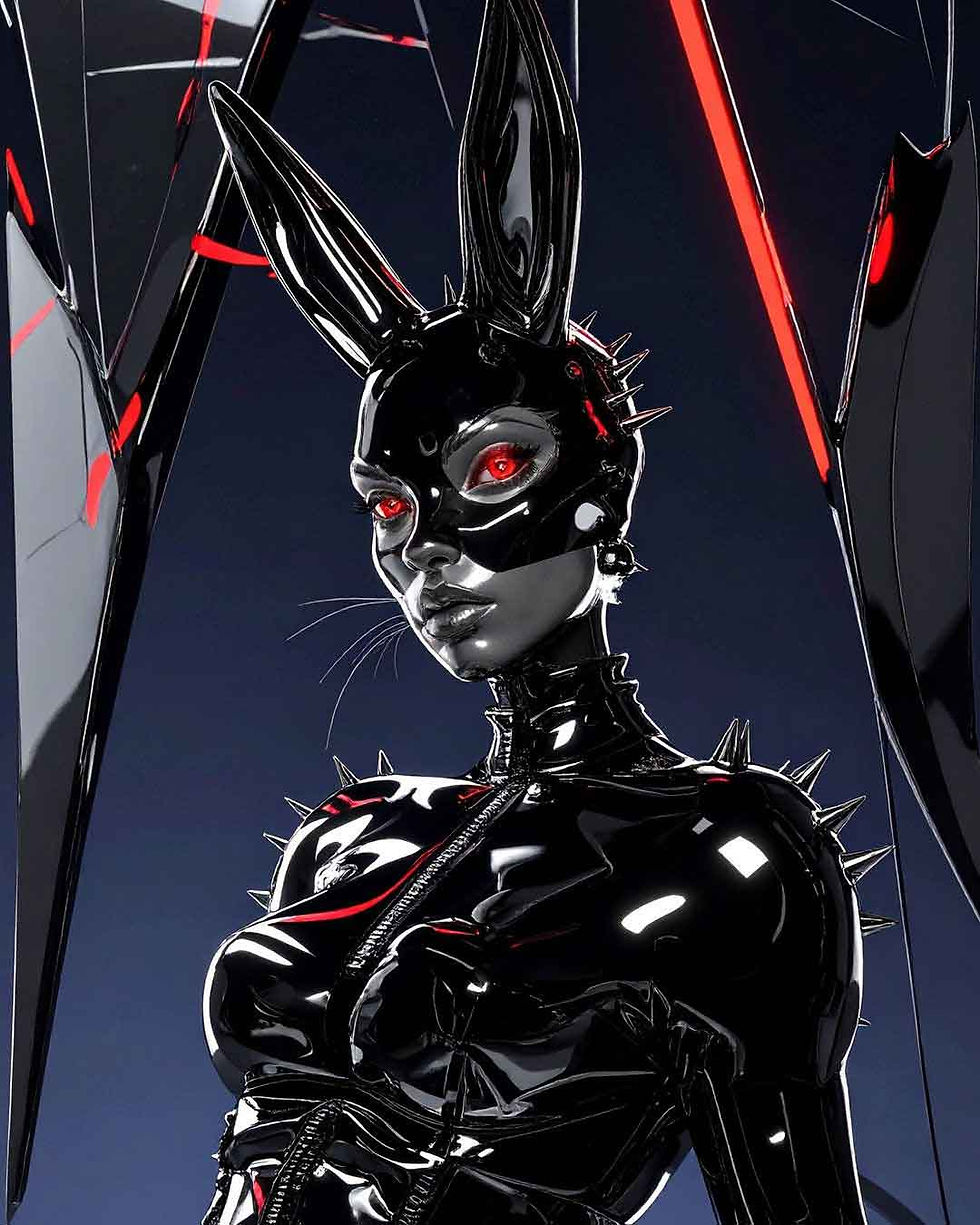
What might traditionally be understood as abstract or emotional is instead rendered tangible. Tension becomes texture, shaping surfaces and interactions. Desire becomes structure, guiding composition and form. Control operates as geometry, introducing precision and hierarchy, while the mask shifts from concealment to authorship, allowing identity to be constructed rather than revealed.
Through this lens, fetish aesthetics are filtered through design logic, where balance, repetition, contrast, and friction determine how objects exist. The outcome is a series of conceptual forms that move between function, symbolism, and speculation, each rooted in the relationship between body and object.

Objects, Rituals, and the Language of Control
Objects within Atomique are not conceived as accessories, but as artifacts that suggest interaction without prescribing it. Their forms imply control, restraint, exposure, or surrender, yet remain open, allowing meaning to emerge through interpretation rather than instruction.
Ritual becomes central to this process, not as performance, but as repetition and structure.
What matters is not the spectacle of an act, but the anticipation that precedes it, and the consistency that gives it form. Through illustration, material exploration, and future physical iterations, Atomique examines how erotic design can exist as something refined and intentional, where absence becomes presence and the body is suggested rather than displayed.
What If Desire Could Shape Design?
At the core of Atomique lies a speculative but fundamental question: what if desire were not separate from design, but one of its driving forces? If ergonomics and engineering shape how objects function, then instinct and arousal can equally shape how they are imagined and constructed.
This perspective reframes creation as something that does not exclude emotion or impulse, but incorporates them into a disciplined system. Atomique exists for those who recognize that what is often hidden or dismissed can, when structured, reveal its own form of clarity. It proposes a space where exploration occurs without apology, guided not by excess, but by precision.
The First Chapter of a Larger System
What exists now is only the beginning. The initial objects and conceptual pieces form the foundation of a broader system that will continue to expand into new formats, materials, and expressions.
Future developments will further dissolve the boundaries between art object, fetish artifact, and design research, creating works that are not only observed but engaged with. Each piece contributes to a growing framework in which material, symbolism, and psychology intersect, allowing the system to evolve organically over time.
Atomique is not content in the conventional sense. It is a structure, a language, and an environment that is still in the process of being built. Within it, desire is not external to design, but integral to it, shaping how form emerges and how meaning is constructed.
If fetish is treated as material, then it inevitably produces structure, and from structure emerges language. The same forces that define objects within Atomique — tension, compression, hierarchy, repetition — also define how desire is understood and communicated.
Concepts such as bondage, latex, power exchange, and ritual are not isolated themes, but interconnected principles that operate across both design and lived experience. Compression becomes both a physical condition and a spatial logic. Hierarchy informs both interaction and composition. Exposure and concealment function simultaneously as aesthetic strategies and identity mechanisms.
Within this framework, the mask becomes a point of intersection between anonymity and performance, where identity is not fixed but constructed. Control is translated into geometry, while texture becomes a form of communication, allowing materials to carry meaning beyond their surface.
The Fetish Index extends this logic by cataloguing these elements not as sensational categories, but as components of a coherent system. It reveals how desire informs object-making, how ritual structures repetition, and how shared visual codes create a form of literacy within fetish culture.
Atomique does not exist separately from this lexicon, but grows directly from it. Each object, image, or speculative form participates in a continuum where instinct becomes framework and sensation becomes structure. Within this system, desire is not external to design.
From Object to Lexicon: Mapping the Architecture of Desire
If Atomique treats fetish as material, then structure becomes inevitable. The same tension that shapes an object also shapes language. Concepts such as Bondage, Latex, Power Exchange, and Ritual Play are not isolated themes — they are design principles translated into human experience. Compression, hierarchy, repetition, exposure: these are as relevant to spatial composition as they are to embodied practice.
The mask, explored through anonymity and surface, intersects with Exhibitionism and Role Play, where identity becomes authored rather than assumed. Control becomes geometry. Texture becomes communication. Even the idea of restraint echoes not only in physical form, but in conceptual limitation — structure as discipline, intention as boundary.
Within The Fetish Index, these elements are catalogued not as categories of shock, but as components of a broader system. The Index does not sensationalize fetish; it diagrams it. It reveals how desire informs object-making, how ritual informs repetition, and how aesthetic codes become shared literacy.
The design universe presented here is not separate from that lexicon — it grows from it. Each card, object, or speculative form exists within a continuum of material, psychology, and symbolism. What begins as instinct becomes framework. What begins as arousal becomes structure.
Desire does not sit outside design.
It drafts it. And the system continues to unfold.
Written by Otávio Santiago
Founder of Atomique Fetish, an editorial platform exploring fetish design, culture & visual research Visual research continues at @atomique.fetish ↗
