


Technosexual Aesthetics in Cyberpunk: Desire, Technology, and the Future Body
Updated: Mar 12
Technosexual Aesthetics in Cyberpunk
The technosexual cyberpunk aesthetic emerges at the intersection of technology, desire, and the body. It reflects a future where intimacy is no longer separate from machines, interfaces, or artificial enhancement. In this vision, sexuality becomes coded, augmented, and mediated by technology — transforming flesh into interface and desire into data.
Cyberpunk does not imagine technology as neutral. It frames it as erotic, invasive, seductive, and deeply political.
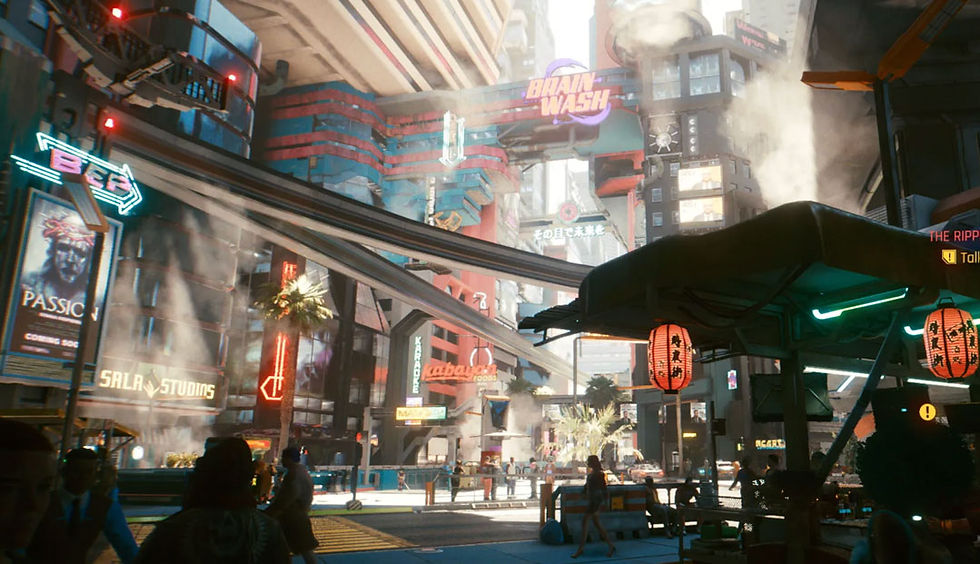
Cyberpunk Origins: Bodies in a High-Tech, Low-Life World
Cyberpunk as a genre emerged in the late 1970s and early 1980s through literature, cinema, and visual culture. Works such as Neuromancer, Blade Runner, and later Ghost in the Shell introduced a future dominated by corporations, surveillance, synthetic bodies, and blurred boundaries between human and machine.
Within this world, the body is no longer sacred or whole — it is modified, hacked, repaired, and optimized. This destabilization of the “natural” body opened space for technosexual fantasy: pleasure mediated through implants, prosthetics, wires, and code.
The Technosexual Body
In technosexual cyberpunk aesthetics, the body becomes a hybrid object:
Flesh fused with metal
Skin punctured by cables and ports
Eyes replaced by optics
Limbs redesigned for function and control
These modifications are not only practical — they are aesthetic and erotic. The exposed mechanics, synthetic textures, and visible interfaces evoke fetishistic fascination with penetration, transformation, and power.
Technology becomes an extension of touch.

Fetish Culture and Cyberpunk Desire
Technosexual aesthetics share deep parallels with fetish culture:
Emphasis on objects and materials
Ritualized interaction with tools and devices
Power dynamics between operator and interface
Sensory amplification through restriction or enhancement
Latex, leather, PVC, metal harnesses, and cybernetic styling appear frequently in both cyberpunk imagery and fetish fashion. These materials signal control, artificiality, and the erotic potential of constraint.
In both worlds, desire is structured — designed, worn, activated.
Power, Control, and Surveillance
A core theme of cyberpunk is control: who owns the body, who programs desire, who monitors intimacy. Technosexual aesthetics explore erotic tension through dominance by systems, machines, or artificial intelligence.
Submission is no longer only interpersonal — it can be technological. Interfaces demand compliance. Devices guide sensation. Pleasure becomes something calibrated, measured, and optimized.
This resonates strongly with fetish dynamics where power is intentionally exchanged and negotiated.
Gender, Identity, and Post-Human Eroticism
Cyberpunk dismantles traditional gender frameworks. Bodies can be rebuilt, reassigned, or endlessly modified. Identity becomes fluid, customizable, and performative.
Technosexual aesthetics embrace:
Synthetic femininity or masculinity
Non-binary and post-gender forms
Artificial personas and avatars
This aligns with fetish culture’s long history of challenging normative identity through roleplay, costume, and transformation.
From Fiction to Contemporary Culture
Today, technosexual cyberpunk aesthetics appear across fashion, nightlife, performance art, and fetish communities:
Industrial and techno club scenes
Cyber-goth and post-industrial fashion
Fetish photography and digital art
Wearable technology and body modification
The future imagined by cyberpunk is no longer distant — it is embodied in contemporary culture.
Technosexual cyberpunk aesthetics reveal a future where desire is engineered, bodies are designed, and intimacy is mediated by machines. By merging fetish culture with technological imagination, cyberpunk transforms sexuality into a site of experimentation, power, and self-definition.
In this world, the body is not lost — it is rewritten.
Technosexuality as Structured Power
Technosexual cyberpunk aesthetics do not merely imagine the fusion of flesh and machine; they reconfigure the architecture of erotic control. The hybrid body becomes a site of engineered Power Exchange, where authority is mediated through systems, interfaces, and coded environments rather than solely interpersonal dynamics.
Within this framework, themes of Dominance and Submission extend beyond human actors into technological structures. Control is exercised through calibration, access, surveillance, and programmed response. What appears dystopian in fiction mirrors the logic of negotiated hierarchy central to fetish systems — where structure governs intensity and agency remains conditional.
The technosexual body also intersects with Identity Play and post-gender embodiment. Artificial augmentation, prosthetic enhancement, and synthetic aesthetics destabilize fixed categories, aligning with practices of Role Play, Body Modification, and aesthetic transformation. Latex, metal, circuitry, and harness-like interfaces function as material signifiers within a broader erotic grammar.
Crucially, even in technologically mediated dynamics, Consent and Protocol remain defining principles. Whether the authority is human, artificial, or systemic, ethical structure determines whether control becomes coercion or chosen participation.
In this sense, technosexual aesthetics do not abandon the body — they reorganize it. Flesh becomes interface, desire becomes code, and eroticism becomes systematized architecture within a culture that already understands power as constructed rather than natural.
Written by Otávio Santiago
Founder of Atomique Fetish, an editorial platform on fetish design
Cultural designer & researcher


