


Fetish in the 1970s: Leather Culture, BDSM Communities, Punk, and the Architecture of the Underground
Updated: Aug 26
The 1970s transformed fetish culture from a network organized largely through images, private encounters, specialist publications, and relatively discreet social circles into something increasingly visible as a community. The sexual revolution of the previous decade had challenged conventional ideas about the body and desire, while gay liberation created a new political language around visibility, identity, and sexual autonomy. During the 1970s, these changes began acquiring physical form through leather bars, BDSM organizations, specialist magazines, clubs, shops, parties, and urban neighborhoods.
This was also the decade in which fetish aesthetics moved more aggressively beyond their original contexts. Leather , rubber, chains, bondage straps, uniforms, boots, and other symbols associated with specialized sexual cultures entered punk, underground fashion, photography, cinema, and contemporary art. At the same time, communities themselves became more organized, developing terminology, social rituals, educational networks, dress codes, and increasingly sophisticated ideas about consent and power exchange.
The importance of the 1970s therefore extends far beyond a particular fashion or sexual aesthetic. The decade created much of the social and spatial infrastructure through which modern fetish culture would understand itself.
Gay Liberation and the Transformation of Sexual Identity
The political movements that expanded after Stonewall changed the possibilities for queer public life. Gay liberation rejected the assumption that homosexuality should remain invisible or be accepted only when it resembled conventional heterosexual respectability, and this shift created space for more complex conversations around sexual identity, pleasure, community, and the body. Leather culture occupied an especially interesting position within this transformation.

Stonewall.
Its highly masculine clothing, explicit relationship with sexuality, and fascination with authority and physicality did not always correspond with the image that mainstream gay organizations wanted to present to wider society. Yet precisely because of this tension, leather communities demonstrated that liberation could involve more than gaining acceptance for sexual orientation; it could also involve defending forms of self-expression that challenged conventional ideas about respectable sexuality.
Fetish identity consequently became increasingly social rather than exclusively private. Clothing, bars, publications, roles, and shared terminology allowed individuals to recognize one another as participants in a cultural world with its own histories and codes.
Leather Culture Becomes an Urban Network
Leather had already developed powerful associations with motorcycles, workwear, military clothing, masculinity, and queer identity during the previous decades, but the 1970s turned these associations into a more developed urban culture.
In cities including San Francisco, New York, Los Angeles, Chicago, London, Amsterdam, and Berlin, bars and clubs provided environments where leather jackets, trousers, harnesses, boots, caps, gloves, and denim became part of a shared visual language.

Leather Bar 1978.
What might appear outside these spaces as motorcycle clothing or workwear could communicate something considerably more specific inside a community capable of reading its references.
San Francisco became particularly important. The South of Market area developed a dense network of leather bars, bathhouses, clubs, businesses, and social organizations, eventually becoming one of the most influential geographical centers of leather culture in the world. Its warehouses and industrial buildings also helped establish an architectural vocabulary that would later become strongly associated with fetish environments.
Exposed brick, concrete, steel, heavy doors, dark interiors, and utilitarian furniture were not initially chosen simply because they looked fetishistic. They belonged to the kinds of inexpensive industrial spaces in which underground communities could establish themselves, but over time the architecture and the culture became visually inseparable.
The Mineshaft and the Architecture of Fetish
New York's Mineshaft, opened in 1976 in Manhattan's Meatpacking District, became one of the most famous examples of fetish culture developing a complete environment around itself.

Its significance was not simply that people interested in leather and BDSM gathered there. The venue demonstrated how architecture, clothing, access, and social ritual could work together to produce a highly specific cultural experience. Dress expectations reinforced the visual identity of the crowd, while dark interiors and differentiated spaces created transitions between sociability, performance, observation, and privacy.
The Mineshaft therefore represented an important development in the history of fetish space. Earlier private rooms and improvised environments could temporarily be transformed through objects and equipment, but venues such as this created spaces whose identity was inseparable from the communities using them.
Architecture became part of the fetish vocabulary alongside leather, boots, restraints, uniforms, and other objects. The underground was no longer simply a metaphor for something hidden from mainstream society; increasingly, it described an actual network of interiors where alternative identities could be collectively performed.
Drummer and the Creation of a Leather Archive
Physical communities required cultural media capable of connecting them, and Drummer, founded in 1975, became one of the defining publications of gay leather history.
Where earlier physique magazines had often relied upon coded representations of male desire, Drummer emerged within a different political and sexual environment. Its pages could engage much more directly with leather, BDSM, masculine identity, clubs, personalities, events, photography, illustration, fiction, and community life.

This made the magazine more than a collection of erotic images. It functioned as a cultural network through which readers could encounter artists, venues, terminology, organizations, personal advertisements, and communities far beyond their own cities.
Publications such as Drummer also performed another function that became increasingly important over time: they preserved the appearance of the culture from within. Clothing, hairstyles, interiors, bodies, graphic design, advertisements, language, and social rituals were documented on printed pages that would later become invaluable historical records.
The fetish magazine had evolved from a discreet carrier of specialized fantasy into an archive of community.
BDSM Organizations and the Development of Shared Knowledge
The decade also saw the expansion of organizations devoted specifically to BDSM community, discussion, and education. The Eulenspiegel Society, founded in New York in 1971, became an important example of this transition by creating opportunities for people interested in sadomasochism to meet and exchange knowledge outside purely private or commercial environments.

This development changed how BDSM practices could be understood. Private experimentation had always produced knowledge, but organizations allowed that knowledge to become collective, creating spaces where terminology, safety, technique, relationships, and ethics could be discussed and transmitted.
The distinction is crucial because modern BDSM culture depends upon more than objects or physical practices. Negotiation, trust, limits, responsibility, communication, and the distinction between consensual power exchange and coercion all require cultural frameworks through which participants can understand what they are doing.
During the 1970s, communities increasingly began producing these frameworks for themselves rather than relying on definitions imposed by psychiatry, law, or outsiders. Fetish and BDSM were developing not only their own aesthetics, but their own social knowledge.
Power Exchange, Roles, and the Ritualization of Identity
As BDSM communities became more organized, dominance and submission could increasingly be discussed as relational structures rather than represented only as visual fantasies. Roles involving authority, obedience, service, discipline, ownership symbolism, and submission could acquire meaning through negotiated relationships rather than simply through theatrical scenes.
This development brought ritual into greater prominence. Titles, clothing, rules, collars, gestures, protocols, and repeated acts could reinforce a particular relationship structure by making otherwise abstract ideas such as authority or service physically recognizable.
Uniforms were particularly effective within this environment because they already communicated role before fetish culture appropriated them. Military, police, medical, domestic-service, and workwear references carried established cultural associations with hierarchy, responsibility, discipline, or institutional identity, allowing roleplay to transform those associations without requiring them to be invented from scratch.
The significance of fetish roleplay therefore depended partly upon the cultural memory contained within objects. A garment could become psychologically powerful because everyone involved already understood the world from which its symbolism had been borrowed.
The Hanky Code and Fetish as Visual Communication
The hanky code, associated particularly with gay leather communities during the 1970s, represents one of the clearest examples of a subculture turning appearance into communication. Colored handkerchiefs worn in particular pockets could indicate interests or roles, although the precise meanings and extent of actual use varied between places and many later published charts greatly expanded the system.
Its historical importance lies less in treating every color combination as a fixed universal language than in recognizing the social logic behind it. Within crowded nightlife environments, a small visual detail could communicate information about identity or preference without requiring a lengthy introduction.
This represented an extension of something fetish culture had been doing for decades. Boots, leather jackets, uniforms, corsets, gloves, and other objects had already carried symbolic information, but the hanky code made the communicative function of clothing unusually explicit.
Long before online profiles allowed people to list interests through categories and icons, subcultures were developing analogue systems for making specialized identities visible.

Punk Takes Fetish onto the Street
While leather and BDSM communities were developing their own institutions, punk began extracting fetish objects from specialist environments and placing them directly into public fashion.
In London, the shop operated by Vivienne Westwood and Malcolm McLaren, known as SEX from 1974, became one of the most influential points of contact between fetish clothing and punk. Rubber, leather, bondage straps, chains, zippers, provocative graphics, and garments associated with sexual subcultures were repositioned within a confrontational youth aesthetic.

Bondage trousers illustrate the transformation particularly clearly. Straps connecting parts of the garment referenced physical restraint while functioning primarily as visible design. The symbolism of bondage could therefore survive even when the original practical function disappeared.
This was an important shift because fetish imagery could now be worn publicly by people who did not necessarily identify with BDSM or established fetish communities. Clothing that had previously communicated specialized sexual meaning could simultaneously become music culture, anti-fashion, provocation, and street identity.
The relationship between fetish and mainstream fashion would never again be entirely separate.
Rubber, Leather, and the Politics of Artificial Surface
Punk's appropriation of rubber was especially significant because the material had long existed between industrial function and specialized erotic interest. Its smooth surface, smell, resistance, tightness, and obvious artificiality made it radically different from conventional fashion textiles.
By wearing rubber publicly, punk culture turned a material associated with protective clothing and fetish environments into an instrument of confrontation. The body could appear sealed, industrial, deliberately uncomfortable, or provocatively artificial in a period when conventional fashion still relied heavily on assumptions about elegance and natural movement.
Leather underwent a related transformation. Within gay leather culture it communicated masculinity and community, while punk could use similar material to suggest aggression, rebellion, destruction, or anti-respectability.
The same material could therefore support radically different identities depending on context, demonstrating how quickly fetish symbols were becoming part of a wider visual vocabulary.
Photography, Art, and the Fetish Body
The 1970s also brought fetish-associated imagery closer to contemporary art. Photographers increasingly documented actual queer and leather communities, while artists explored the body through performance, sexuality, gender, pain, vulnerability, and self-transformation.
Robert Mapplethorpe, whose career developed substantially during the decade, became particularly important to this transition. His photographs approached male bodies, leather culture, BDSM imagery, portraiture, and still life through highly controlled composition and formal precision, refusing the assumption that erotic or fetish subjects belonged to a visual category incompatible with serious art.
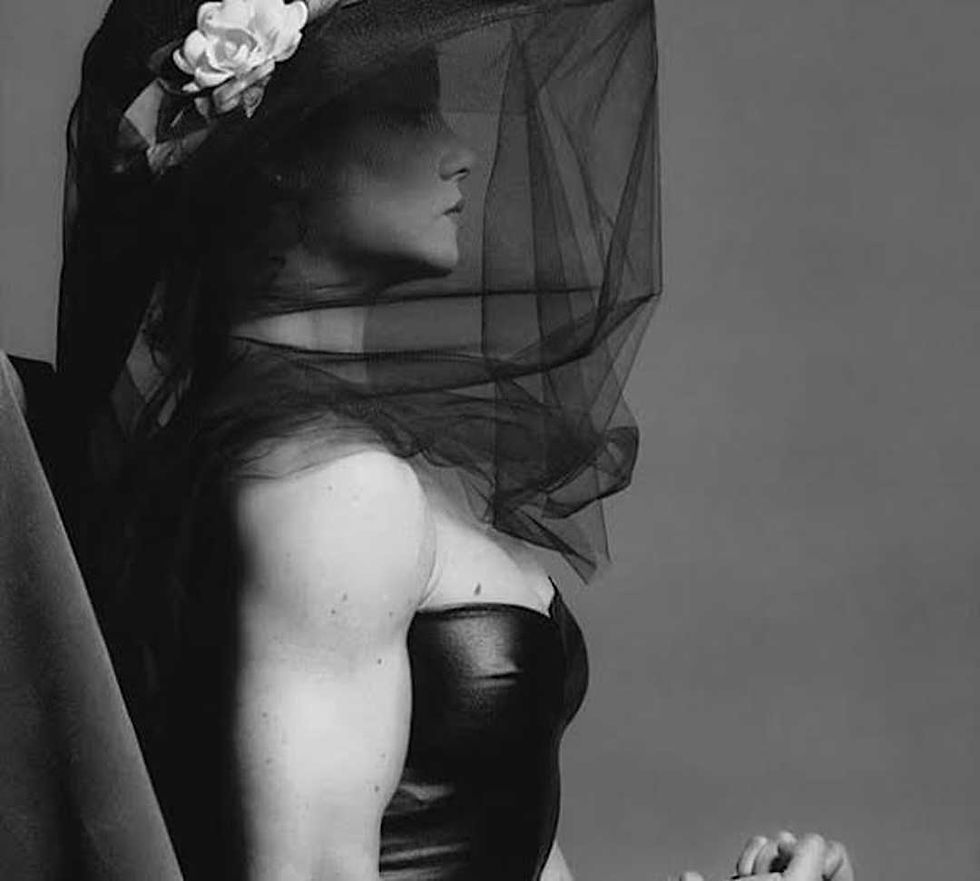
His work would become the center of much larger cultural conflicts during the following decade, but its development in the 1970s already represented a fundamental change. The fetish image could circulate simultaneously within sexual subculture and an emerging fine-art context, forcing viewers to confront the unstable distinction between erotic documentation, portraiture, formal photography, and pornography.
Photography was beginning to move fetish imagery from private collections and specialist publications toward galleries and museums.
The 1970s and the Construction of Fetish Space
Perhaps the most important development of the decade was the growing relationship between fetish identity and physical environment. Bars, clubs, private dungeons, studios, shops, bathhouses, and adapted industrial buildings created spaces where clothing, furniture, lighting, sound, objects, and social codes could operate together.
The BDSM dungeon gradually developed its own recognizable vocabulary through restraint structures, benches, cages, suspension points, chains, medical furniture, and other specialized equipment. These objects did more than fill a room because they organized how bodies moved through it, where attention was directed, and how different forms of interaction became possible.
This relationship between equipment and architecture would become increasingly sophisticated over subsequent decades, but the essential principle was already established. Fetish environments were immersive because identity was reinforced simultaneously by clothing, objects, architecture, and community. The room itself had become part of the experience.
From the 1970s to the Fetish Visibility of the 1980s
By the end of the 1970s, fetish culture possessed an infrastructure that would have been almost unimaginable at the beginning of the century. Leather communities had established recognizable urban networks, BDSM organizations were creating systems for education and shared knowledge, magazines such as Drummer documented communities from within, and venues such as the Mineshaft demonstrated how architecture could become inseparable from subcultural identity.
At the same time, fetish aesthetics were escaping the boundaries of the communities that had developed them. Punk transformed bondage, rubber, leather, chains, and sexual imagery into public fashion, while photographers such as Robert Mapplethorpe began bringing bodies and practices associated with the underground into contemporary art.
The 1980s would make these intersections even more visible. Fetish imagery would enter high fashion, music videos, performance, galleries, and increasingly sophisticated club cultures, while figures such as Grace Jones, Leigh Bowery, Jean Paul Gaultier, and Mapplethorpe would explore radically constructed bodies and identities. Yet this expansion would occur alongside the devastating arrival of the AIDS crisis, which transformed queer communities, nightlife, sexuality, activism, and the preservation of an entire generation's cultural memory.
The 1960s had connected fetish with the sexual revolution; the 1970s gave that culture institutions, publications, communities, and spaces. By 1980, the underground had become culturally powerful enough that the mainstream could no longer avoid looking at it.
Related Concepts
Military Fetish
Power Exchange
Dominance and Submission
Hanky Code
Fetish Photography
Written by Otávio Santiago
Founder of Atomique Fetish, an editorial platform exploring fetish design, culture & visual research.
Visual research continues at @atomique.fetish ↗


