


Bondage: The First Letter of BDSM — From Shibari Origins to Contemporary Fetish Culture
Updated: Jun 3

Photography: Envato Elements
Bondage is the “B” that opens the acronym BDSM, yet its meaning extends far beyond tied wrists or rope on skin. Bondage is structure. It is ritual. It is psychology. It is the erotic architecture of trust. Among all fetish practices, bondage is one of the oldest, most codified, and most visually iconic — a language of knots, forms, aesthetics, and power dynamics that has shaped global fetish culture.
From the intricate rope patterns of Japanese shibari to the minimalist leather restraints of contemporary BDSM, bondage remains a meeting point between art and eroticism, control and surrender, vulnerability and strength.
Shibari & Kinbaku: The Japanese Roots of Rope Bondage

Photography: Envato Elements
Bondage has many origins, but one of the most influential within modern fetish culture is shibari — the Japanese practice of artistic rope binding.
Historically, shibari evolved from Hojojutsu, a martial art used by samurai to restrain captives. Over centuries, these techniques transformed from functional restraint to an erotic and aesthetic practice known as kinbaku (“tight binding”).
The Core Elements of shibari
Aesthetics: Rope patterns (katas) across the body create geometric beauty.
Discipline: Every knot carries symbolism, technique, and precision.
Emotional depth: The connection between rigger and model is intimate and psychological.
Ritual: Sessions emphasize breath, tempo, and intentionality.
Surrender: Rope becomes a pathway to vulnerability and release.
Shibari is not simply “tying.” It is an erotic performance — merging sculpture, discipline, and emotional power exchange.
Bondage in Western BDSM: Power, Trust, and Sensation

Photography: Envato Elements
In Western BDSM traditions, bondage expanded through leather culture, early underground clubs, and queer communities. Unlike shibari, which prioritizes visual harmony, Western bondage often focuses on:
functional restraint
physical immobilization
sensory control
psychological dominance
roleplay and fantasy
Equipment evolved from simple ropes to:
leather cuffs
metal spreaders
suspension gear
medical restraints
latex harnesses
Western bondage is diverse, adaptable, and deeply connected to the broader BDSM principles of dominance, submission, safety, and negotiation.
Why Bondage Fascinates — The Psychology Behind the Practice
Bondage operates on multiple psychological layers:
1. Trust & Intimacy
Restraint requires vulnerability; tying requires responsibility. Bondage becomes a ritual of mutual care.
Restraint expresses roles: Dominance through control, submission through surrender.
3. Sensory Focus
When the body cannot move, sensations intensify — touch becomes sharper, breathing deeper, time slower.
4. Aesthetic Pleasure
Rope marks, tension lines, symmetry, and physical stillness create erotic visual poetry.
5. Catharsis
For many, bondage provides emotional release, grounding, or a meditative state.
Bondage is more than fetish. It is a psychological landscape.
Bondage Today: From Fetish Clubs to Performance Art
In contemporary culture, bondage has crossed into:
photography
fashion editorials
art performances
queer nightlife
body positivity spaces
therapeutic exploration
Artists like Robert Mapplethorpe, Nobuyoshi Araki, and countless queer performers have integrated rope and restraint into high art and cultural expression.
Shibari workshops now take place internationally, and rope communities emphasize inclusivity, consent, and technique — making bondage accessible far beyond the underground scenes where it once lived.
Bondage as Fetish: Desire, Identity, and Embodiment
Within fetish culture, bondage functions as:
A Ritual of Identity
Dominants, submissives, switches — roles find expression through rope.
A Language of Eroticism
Every knot, tension, and position communicates desire.
A Space of Transformation
Those bound become artworks— bodies sculpted by intent.
A Mirror of Fantasy
Bondage allows exploration of:
control
helplessness
surrender
discipline
objectification
exhibitionism
These fantasies are not about harm —but about structured desire expressed in consensual, negotiated roles.
At Atomique, bondage represents more than a sexual practice. It is:
an aesthetic architecture
a symbolic ritual
a psychological exploration
a cultural heritage that spans continents
a visual language of power, beauty, and emotion
Bondage is the foundation of BDSM not because it restricts movement, but because it awakens awareness, intimacy, and meaning.
It is the first letter —and, for many, the first doorway into the universe of fetish.
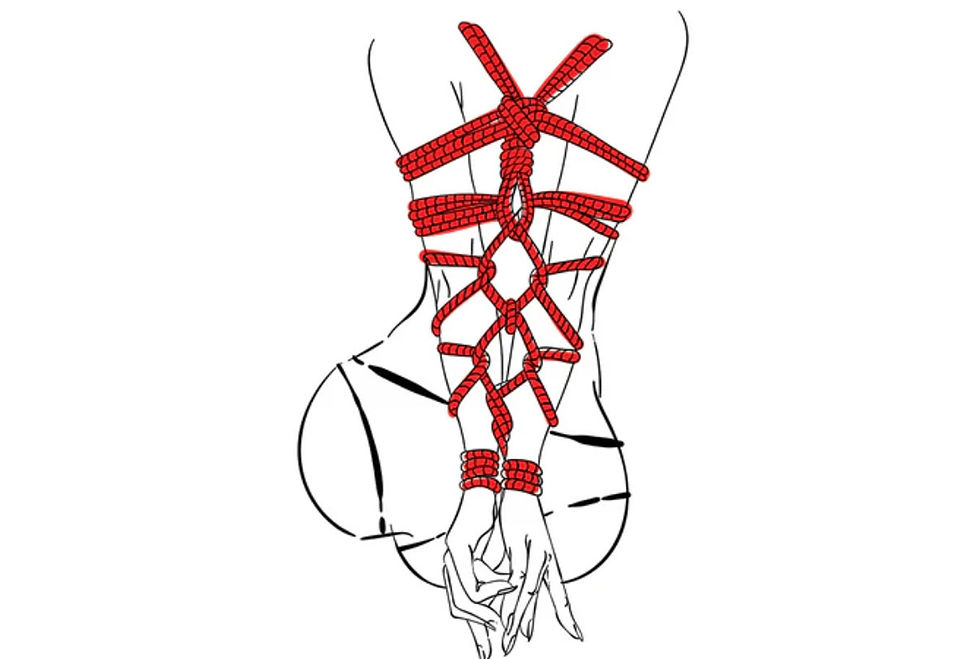
Archival reference: creator unknown. Shared as part of visual culture research.
Rope as Language, Ritual as Structure
In fetish culture, bondage does not stand alone. It exists within a wider constellation of practices that explore tension, intention, negotiated vulnerability, and embodied structure.
Shibari appears not merely as technique, but as aesthetic philosophy — rope as geometry, breath as tempo, the body suspended between gravity and trust. It enters into dialogue with Dominance and Submission, yet remains equally anchored in Boundaries, where invisible agreements shape visible restraint.
Bondage intersects with Sadomasochism, where sensation becomes articulation; with Edge Play, where intensity demands literacy of risk; and with Aftercare, where compression yields to restoration. What is tightened must eventually be held.
What is restricted must be re-integrated.
Rope may limit motion, but it expands awareness — amplifying pulse, silence, and the charged interval between control and surrender. It also resonates with Sensory Deprivation, where perception is reorganized and touch becomes architecture. To bind someone is not only to immobilize them; it is to redesign their sensory landscape. In this framework, bondage emerges as a structural pillar of fetish culture.
Not merely restraint — but choreography.
Not only control — but spatial design enacted on living form.
Rope becomes syntax.
The body becomes surface.
Desire becomes structure.
And every knot belongs to a wider grammar of intention.
Written by Otávio Santiago
Founder of Atomique Fetish, an editorial platform exploring fetish design, culture & visual research.
Visual research continues at @atomique.fetish ↗


