


Joel-Peter Witkin: The Macabre Visionary Who Shaped Fetish Aesthetics and Subcultural Visual Language
Updated: Feb 21
Joel-Peter Witkin is one of the most provocative photographers of the 20th and 21st centuries — an artist whose work, though not explicitly queer, has profoundly influenced queer, fetish, and subcultural aesthetics worldwide.
His photography merges mythology, anatomy, erotic transgression, and taboo into meticulously staged tableaux. Witkin’s universe is populated by amputees, gender-nonconforming bodies, cadavers, ritual scars, classical allegory, and theatrical compositions that blur the line between beauty and abjection.
For decades, Witkin has pushed photography into forbidden territories — confronting death, disability, erotic difference, and the grotesque. His work resonates deeply within fetish culture, where the body itself becomes a site of ritual, transformation, and power.
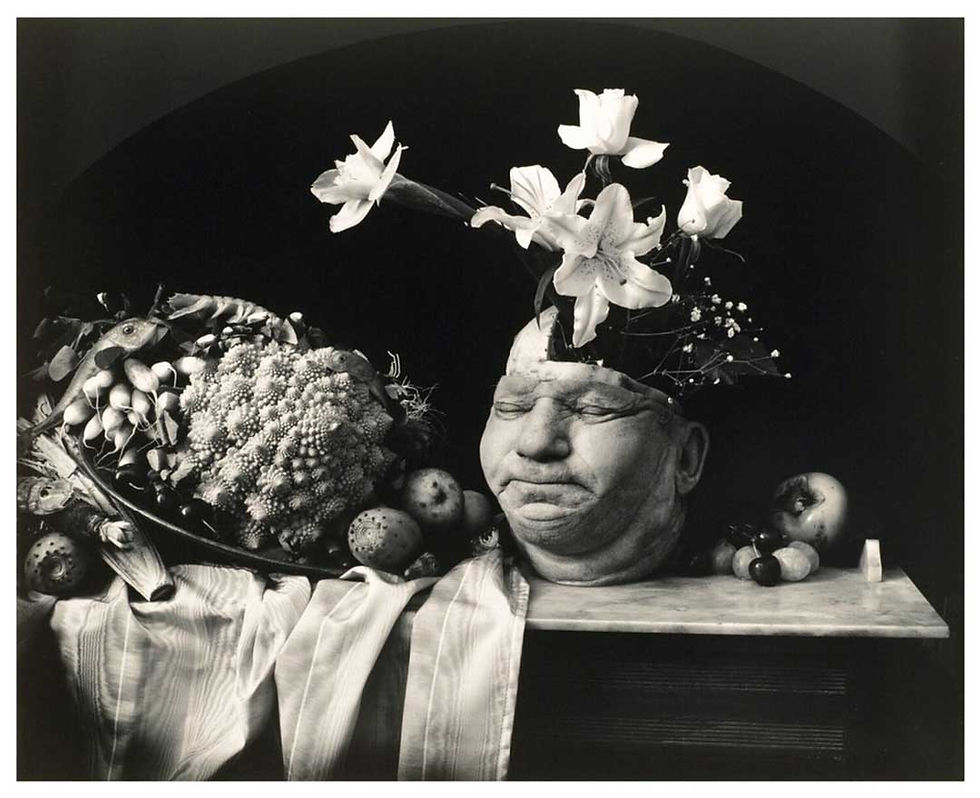
Joel-Peter Witkin and the Aesthetic of Transgression

While Joel-Peter Witkin never formally aligned himself with queer political movements, his work resonates profoundly with queer spectatorship and fetish visual culture.
His photography rejects normative beauty standards and instead elevates bodies that exist outside social acceptability. In doing so, he created a visual archive of outsiders, erotic minorities, and transgressive bodies rarely acknowledged within canonical art history.
Witkin’s grotesque is not degradation — it is revelation.
The Grotesque as Sacred Theater
Inspired by Baroque painting, Catholic iconography, and mythological allegory, Witkin’s compositions use shock as illumination.
The grotesque becomes sacred.
The taboo becomes theatrical.
The abnormal becomes erotic.
His images ask a central question that echoes through fetish culture:
Where does desire begin when social rules dissolve?
This philosophical inquiry parallels core dynamics within BDSM aesthetics and ritualized sexuality — where vulnerability, control, and spectacle merge.
A Visual Language That Shaped Fetish Subculture

From queer nightlife to latex fashion editorials, from body modification culture to contemporary fetish photography, Joel-Peter Witkin’s influence is unmistakable.
His work foregrounds:
• Transgressive beauty
• The eroticism of the non-normative body • Ritualized staging
• The intimacy between violence and vulnerability
• The sacred power of deviance
Many contemporary visual expressions within leather culture, dungeon aesthetics, and fetish performance trace back to the emotional architecture Witkin helped legitimize.
His photographs function as a silent blueprint for artists exploring power exchange, body transformation, and symbolic erotic ritual.
Death, Ritual, and the Erotics of the Macabre
Witkin’s use of cadavers and anatomical fragments was not merely shock-driven. His still lifes evoke religious relics, martyr iconography, and sacred ritual objects.
In his visual world, death is not an endpoint — it is contemplation. It is transformation. It is erotic tension suspended between fear and reverence.
This merging of eros and mortality parallels the psychological charge found in certain expressions of fetish culture — where taboo becomes a vehicle for confrontation and identity reconstruction.

Joel-Peter Witkin’s Legacy in Contemporary Fetish Culture
Joel-Peter Witkin’s legacy is not scandal — it is permission. He created space for:
• The extraordinary body
• The fetishistic gaze
• The macabre imagination
• The erotic outsider
• The ritualization of difference
His work expanded the aesthetic language of subculture long before mainstream discourse acknowledged body politics, disability visibility, or queer erotic representation. For projects like Atomique, Witkin represents an essential ancestor — a cartographer of taboo and a visual theorist of transgression.
Related Concepts in Fetish Culture
Joel-Peter Witkin’s visual language intersects with foundational structures within fetish and BDSM culture. His aesthetic does not merely shock — it mirrors the psychological and symbolic systems that organize transgressive desire.
Witkin’s staged rituals echo the dynamics of Sadomasochism, where intensity becomes choreography and pain transforms into performance. His theatrical compositions reflect the structure of Ritual Play, in which repetition, symbolism, and deliberate staging elevate experience beyond impulse.
The altered and extraordinary bodies that populate his photographs resonate with practices of Body Modification, where flesh becomes both medium and message. In many ways, Witkin’s subjects embody the visual extremities of identity that fetish communities have long examined through transformation, marking, and aesthetic control.
Themes of hierarchy and gaze within his work parallel Power Exchange, a central concept in BDSM culture that structures desire through negotiated authority and vulnerability. His attention to staging and environment also recalls the architecture of the Dungeon — a space where spectacle, containment, and consent coexist.
Finally, the tension between subject and spectator in Witkin’s photography speaks to dynamics of Objectification, where the body becomes symbol, artifact, or altar — not in degradation, but in ritual framing.
Understanding these concepts reveals that Witkin’s imagery is not isolated provocation. It participates in a broader aesthetic lineage shared with fetish culture — one rooted in symbolism, structure, and embodied transgression.
Explore these ideas in greater depth in The Fetish Index, Atomique’s structured archive of fetish terminology, psychological dimensions, and cultural frameworks.
Visit The Fetish Index
Written by Otávio Santiago
Founder of Atomique Fetish, editorial platform on fetish design
Cultural design & research


