


Vaginal Davis: The Drag Terrorist Who Rewired Cultural Fetishism
Updated: Feb 21
Some artists perform drag.
Some artists provoke culture.
Vaginal Davis detonates both.
A legend of queer counterculture, a punk siren, a grotesque visionary, and a cultural fetishist of the highest order, Vaginal Davis is not just a performer — she is a system malfunction.
A living glitch.
A refusal embodied.
While mainstream drag has gone glossy, marketable, and algorithm-friendly, Davis remains a reminder that drag was born as eruption, not entertainment.
Her presence is a weapon.
Her body, a manifesto.
Her aesthetics, a critique disguised as chaos.

The Anti-Norm Queen of Queer Punk
Vaginal Davis emerged in the 1980s–90s Los Angeles queer-punk underground, long before drag became a commercial export. Her work, spanning performance art, music, essays, and visual culture, combines:
political sabotage,
racial critique,
gender terrorism,
grotesque aesthetics,
experimental fetishism,
and an outrageous sense of humor.
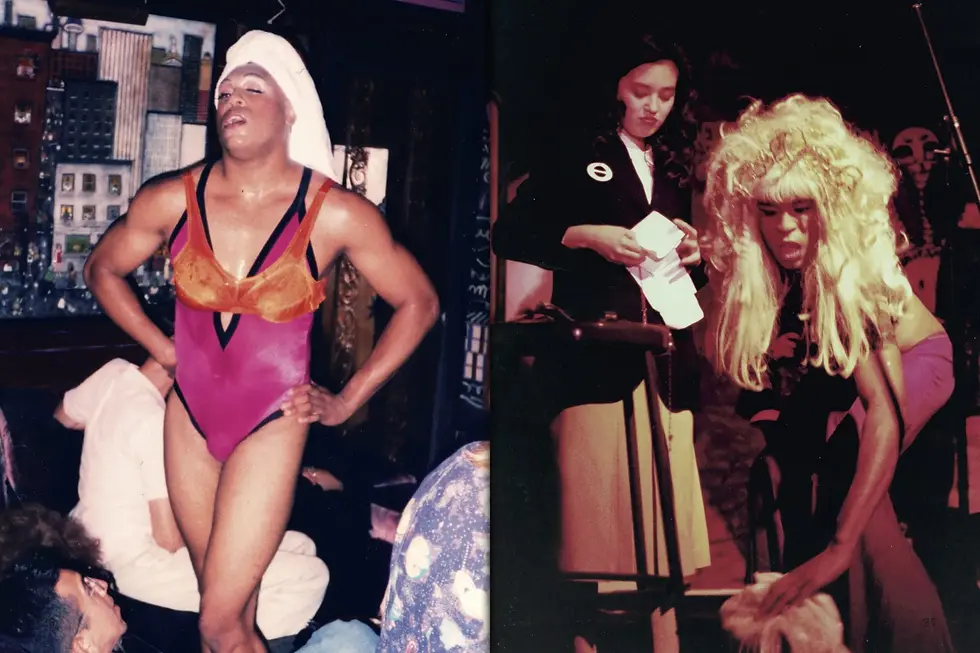
She is, in every sense, anti-norm.Not anti-beauty — anti the idea of beauty.Not anti-gender — anti the institution of gender. Her drag doesn’t imitate femininity. It infects it.It exaggerates it until the social fiction becomes obvious, ungovernable, hysterical.

Grotesque as Resistance
While modern drag often seeks glamour, Davis cultivates a deliberate grotesque: smeared makeup, collapsing wigs, deconstructed silhouettes, DIY fetish-wear, and industrial-punk styling. But the grotesque, in her hands, is not “ugly.”It is revelatory.
The grotesque reveals that:
femininity is a construction,
whiteness is a performance,
gender is a costume,
the body is already political,
and cultural desire is inherently distorted.
Davis uses grotesque aesthetics not to shock — but to unmask.
Vaginal Davis Drag Terrorist - Cultural Critique
Davis coined herself a drag terrorist, and the title is earned. Her work attacks:
white supremacy,
Hollywood beauty culture,
queer assimilation,
patriarchal narratives,
colonial erotics,
and the sanitization of queer aesthetics.
She doesn’t conform to categories; she corrupts them. Through her bands (Pedro, Black Fag, ¡Cholita!), her zines, and her performances, she produced a body of work that blends comedy, punk, fetish, and political assault. She turns the stage into a battleground where bodies, genders, and desires collide in messy, brilliant disobedience.

Cultural Fetishist, De-fetishizer, Re-fetishizer
What makes Vaginal Davis essential to weaponize fetish itself.
Her work is simultaneously:
fetishistic (celebrating the extreme, the perverse, the taboo),
anti-fetish (exposing how society fetishizes gender, race, and identity),
re-fetishizing (reclaiming the fetish as a queer political tool).
She treats culture like a body to be modified: cut open, reassembled, hybridized, and injected with punk venom. Her drag becomes a ritual of cultural body modification.
A Figure Too Big for Mainstream Histories
Davis refuses assimilation.
She refuses definition.
She refuses to be archived neatly.
This is why she remains a foundational ghost in the machine of queer art — a force that continues to haunt drag, performance art, and cultural studies. She wasn’t built for mainstream drag stages; she was built for the underground, for the ritual space where desire, politics, race, and grotesque beauty merge.
Her work reminds us that:
drag can be insurgent,
fetish can be intellectual,
punk can be theory,
and the body can be a critical weapon.

Grotesque Ritual and the Politics of Reinvention
Vaginal Davis does not “perform drag” — she weaponizes construction itself. Her aesthetic destabilizes norms in ways that resonate deeply with concepts such as Gender Bending, where identity is not imitated but exaggerated until it fractures, and Role Play, where persona becomes a deliberate act of cultural sabotage rather than entertainment.
Her grotesque styling — smeared makeup, distorted silhouettes, DIY fetish-wear — intersects with Exhibitionism, not as display for approval, but as confrontation. The body is staged as critique. Visibility becomes insurgent rather than decorative.
There is also a structural link to Objectification, though inverted. Davis refuses passive consumption; she manipulates her own image to expose how race, femininity, and queerness are already fetishized by dominant culture. In doing so, she performs a radical form of re-authorship, turning the gaze back on itself.
Her disruption of sanitized drag culture parallels the intensity found in Primal Play, where instinct overrides etiquette, and in Ritual Play, where repetition and exaggeration create transformative atmosphere. The stage becomes ritual chamber — not polished spectacle, but charged terrain.
Even her reclamation of the grotesque aligns with Body Modification as cultural metaphor: the body altered, distorted, hybridized to reveal hidden structures of power. She treats identity as mutable architecture, cutting into it to show its seams.
Within The Fetish Index, such practices are mapped as systems of aesthetic resistance — where performance, fetish, politics, and spectacle overlap. Vaginal Davis stands at the intersection of these forces, proving that fetish can be critical theory, that drag can be insurgency, and that the grotesque can function as revelation rather than excess.
She does not soften culture.
She dissects it.
And in doing so, rewires the visual language of desire itself.
Written by Otávio Santiago
Founder of Atomique Fetish, editorial platform on fetish design
Cultural design & research


