


Roleplay: Identity, Performance, and the Human Imagination
Few human abilities are as universal—or as misunderstood—as roleplay. It appears instinctively in childhood, survives throughout adulthood, and can be found in almost every culture regardless of geography, religion, or historical period. Long before written language, people adopted symbolic identities through ritual, masks, storytelling, dance, and ceremonial performance, discovering that imagination could temporarily transform not only behaviour but also the experience of being human.
Although roleplay is often associated with theatre, gaming, cosplay, or BDSM, these represent only different expressions of the same psychological capacity. The desire to become someone—or even something—else is deeply rooted in the way the human brain constructs identity. Rather than existing as a fixed and permanent state, the self is remarkably flexible, capable of adapting to different social environments, emotional experiences, and symbolic frameworks throughout life.
Modern psychology increasingly understands roleplay as an essential mechanism through which people learn, communicate, regulate emotions, explore relationships, and imagine possibilities beyond everyday experience. Fetish culture therefore does not invent roleplay. It expands one of humanity's oldest cognitive and cultural traditions.
Childhood and the Origins of Symbolic Play
Developmental psychology has consistently identified pretend play as one of the foundations of human cognition. Long before children understand abstract concepts, they begin transforming ordinary objects into imaginary worlds. A wooden stick becomes a sword, a blanket becomes a royal cape, while the family living room effortlessly transforms into a pirate ship, a castle, or a distant planet. None of these transformations depends on physical reality. They exist because the human brain possesses an extraordinary ability to assign symbolic meaning to objects, spaces, and actions.
Researchers such as Jean Piaget and Lev Vygotsky argued that these games are not distractions from learning but among its most important forms. By pretending to become doctors, teachers, parents, explorers, animals, or mythical heroes, children rehearse empathy, language, cooperation, emotional regulation, and problem-solving long before these situations become part of adult life. Roleplay functions as a psychological laboratory where imagined experiences prepare the mind for real ones.
This capacity never disappears. It simply becomes more sophisticated as culture provides increasingly complex symbolic systems through which adults continue to explore identity.
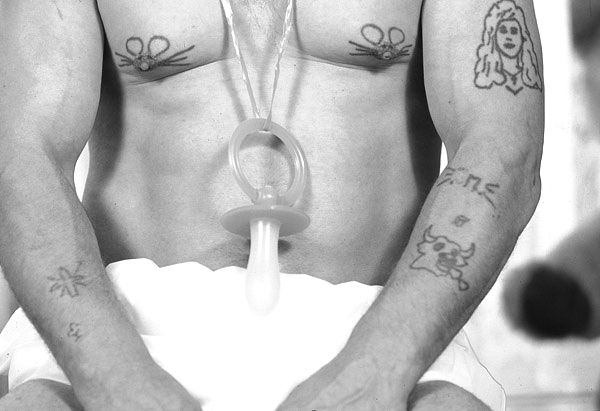
Image licensed via Google.
Theatre, Ritual, and the Performance of Identity
Long before theatre became an artistic discipline, ritual had already established performance as one of humanity's primary methods of constructing social reality. Across civilizations, masks, ceremonial clothing, body painting, jewellery, and symbolic gestures transformed ordinary individuals into priests, warriors, ancestors, rulers, spirits, or mythical beings. These performances did not simply entertain; they organized communities, expressed belief, and gave visible form to invisible ideas.
Modern sociology suggests that everyday life operates in much the same way. Erving Goffman's influential work described social interaction as a continuous performance in which individuals adjust behaviour according to audience, environment, and expectation. The personality presented inside a courtroom differs from the one expressed at a family dinner, while professional identities often require entirely different gestures, language, and appearance from private relationships. Rather than revealing deception, these shifts demonstrate that identity itself is fluid, negotiated, and deeply dependent upon context.
Roleplay makes this process explicit. It reveals that identity is not something people simply possess but something they continuously construct through symbols, behaviour, and social interaction.

Personal Archive.
Games, Fiction, and Imagined Worlds
The enormous popularity of games, novels, cinema, tabletop role-playing, live-action roleplay, and digital worlds demonstrates that humans possess a profound desire to inhabit fictional realities. Whether playing Dungeons & Dragons, participating in historical reenactments, exploring virtual worlds, or becoming emotionally invested in a film, people willingly enter symbolic systems whose rules differ from everyday life while remaining fully aware that the experience is fictional.
Neuroscience provides an important explanation for this phenomenon. Imagined experiences activate many of the same neural networks involved in direct perception, allowing fictional situations to generate genuine emotional responses. Fear experienced during a horror film, grief following the death of a fictional character, or excitement during an immersive game are not illusions. They are authentic emotions emerging from symbolic experiences.
Roleplay therefore demonstrates one of the defining characteristics of human consciousness: imagination can create emotional realities without replacing objective reality.
Clothing, Costume, and the Construction of the Self
Identity has always been deeply connected to clothing. Anthropologists have repeatedly shown that garments communicate status, profession, gender, belief, authority, and belonging long before conversation begins. Uniforms establish institutional hierarchy, ceremonial dress marks transitions between social roles, while fashion itself allows individuals to negotiate personal identity through material culture.
Psychologists studying enclothed cognition have demonstrated that clothing influences not only how others perceive us but also how we perceive ourselves. A military uniform encourages posture associated with discipline and authority, formal tailoring often reinforces confidence, while specialised garments used in sport, dance, or ritual alter bodily awareness through movement, weight, and physical sensation.
Within roleplay, clothing becomes one of the primary technologies of transformation. Corsets reshape silhouette, latex creates an artificial second skin that changes the body's relationship with light, and high heels reorganize balance, posture, and movement. Costume is therefore not decoration but an active participant in psychological experience, helping the brain transition between different identities.
Cosplay and Contemporary Identity
Few contemporary practices illustrate the psychology of roleplay more clearly than cosplay. Around the world, millions of people invest extraordinary time and craftsmanship into recreating fictional characters from films, comics, anime, literature, and video games. The appeal extends far beyond costume design. Cosplay allows participants to temporarily inhabit personalities, gestures, relationships, and symbolic worlds that exist outside everyday experience.
Importantly, cosplay demonstrates that adults continue to engage in imaginative identity construction throughout life. Rather than abandoning symbolic play after childhood, they develop increasingly sophisticated forms of performance supported by communities, conventions, photography, digital media, and shared cultural references.
The same psychological mechanisms that once transformed a child into a pirate later allow an adult to become a science-fiction hero, a medieval knight, or a mythological figure.
Animal Identity and Pet Play
Some forms of roleplay move beyond human identities altogether. Pet play, puppy play, pony play, kitten play, and related practices explore symbolic relationships inspired by animals rather than attempting literal imitation. Participants often describe these dynamics as opportunities to experience loyalty, instinct, discipline, affection, curiosity, freedom, or playfulness through simplified forms of communication and behaviour.
These practices have deep historical echoes. Animal transformations appear throughout mythology, religious ceremony, folklore, and shamanic traditions, where becoming an animal represented psychological or spiritual change rather than biological impossibility. Contemporary pet play continues this symbolic tradition within a consensual and community-based context, demonstrating that roleplay frequently extends beyond social identity into entirely different models of existence.

Personal Archieve.
Service, Domestic Ritual, and the Psychology of Care
Roleplay does not always involve fantasy. Some of its most psychologically complex expressions are rooted in ordinary social roles that become meaningful through structure, ritual, and repetition. Domestic service, housekeeping, butlers, maids, secretaries, caregivers, Masters, slaves, handlers, and personal assistants all borrow familiar forms of labour while transforming them into symbolic frameworks through which responsibility, devotion, authority, and care are consciously explored.
The attraction often emerges from clarity rather than novelty. Clearly defined roles reduce ambiguity, repeated rituals reinforce identity, and everyday actions acquire symbolic weight through shared understanding. Cleaning a room, serving a meal, preparing clothing, or following household protocols become meaningful because they exist within a carefully negotiated narrative rather than ordinary routine.
Anthropologists have long argued that ritual transforms daily behaviour into cultural expression. Service dynamics illustrate this principle with remarkable clarity.
Objectification and Human Furniture
Perhaps no form of roleplay challenges conventional ideas of identity more radically than objectification. Human furniture, living statues, decorative display, mannequins, dolls, and other object-based dynamics invite participants to imagine themselves not as different people but as carefully designed objects occupying space in entirely new ways.
Although these practices may initially appear unusual, they explore questions that have fascinated artists, architects, and philosophers for centuries. What defines usefulness? Where does identity reside when movement is reduced or suspended? How does the body change when it becomes part of architecture, furniture, or interior design rather than ordinary social interaction?
These scenarios reveal that roleplay is not limited to personality alone. It can transform the body's relationship with space, design, function, and perception, demonstrating how imagination continually reshapes the boundaries between subject and object.
BDSM and the Architecture of Symbolic Relationships
Within BDSM, roleplay reaches one of its most sophisticated forms because it combines identity, ritual, communication, symbolism, and carefully negotiated relationships into coherent psychological frameworks. Master/slave dynamics, Dominance and Submission, owner/pet relationships, medical roleplay, military scenarios, authority figures, domestic service, and countless other identities rely upon the same mechanisms found throughout theatre, ritual, and symbolic play.
What distinguishes BDSM is not the existence of roles themselves but the ethical structure supporting them. Every identity, title, object, and ritual exists through explicit consent, allowing participants to construct symbolic worlds that remain separate from everyday reality while producing authentic emotional experiences. Trust, communication, and negotiation become the foundations upon which these imagined identities acquire meaning.
Rather than existing outside ordinary psychology, BDSM demonstrates how roleplay can become one of the most sophisticated forms of interpersonal communication.

Image licensed via Google.
Roleplay as Human Nature
The history of roleplay is ultimately the history of imagination itself. From prehistoric rituals and childhood games to theatre, literature, cosplay, digital worlds, religious ceremony, and fetish culture, humans have continually explored the possibility of becoming someone—or something—other than themselves. These transformations reveal that identity is not a fixed destination but an ongoing cultural process shaped by symbols, performance, relationships, and imagination.
Seen from this broader perspective, fetish roleplay belongs to one of humanity's oldest creative traditions. It demonstrates that performance is not an escape from reality but one of the ways reality is interpreted, expanded, and understood. Every costume, every ritual, every role, and every symbolic gesture reminds us that the human imagination has always possessed the remarkable ability to transform ordinary life into meaningful experience.
Related Concepts in the Atomique Fetish Archive
Pony Play
Human Furniture
Dominance and Submission (D/s)
Cosplay and Identity
Written by Otávio Santiago
Founder of Atomique Fetish, an editorial platform exploring fetish design, culture & visual research.
Visual research continues at @atomique.fetish ↗


