


Irving Klaw: Fetish Photography, Bettie Page and the Rise of Underground Culture
Irving Klaw was an American photographer and filmmaker known for documenting early fetish photography and alternative visual culture. His work with Bettie Page helped define an underground aesthetic that influenced pin-up imagery, BDSM representation, and modern fetish archives.
Before fetish had clubs, before BDSM had a name, before kink entered mainstream culture — there was Irving Klaw. Klaw’s New York studio in the 1940s–50s became the birthplace of the modern fetish image: corsets, heels, rope ties, gloves, high-kick poses, Amazon women, stilettos, and the iconic Bettie Page bondage series. He didn’t invent fetishism, but he invented how fetish looks.
Klaw operated primarily between the late 1940s and early 1960s in New York, producing thousands of photographs and short films that circulated through mail-order catalogues. His work attracted the attention of U.S. authorities during the 1950s obscenity crackdowns, culminating in investigations that forced him to cease operations and destroy a large portion of his archive in 1963. What remains today survives not as a complete body of work, but as fragments that nevertheless shaped an entire visual culture.

From Film Collector to “Fetish Archivist”
Irving Klaw began as a movie still collector. But clients began requesting more specific imagery:
women in high heels
tight skirts and corsets
legs bound with rope
dominant women overpowering smaller men
wrestling scenes
lingerie pin-ups with a BDSM undertone
Klaw discovered a niche market hungry for erotic imagery that was strangely playful, theatrical, and taboo. He responded by building one of the first mail-order fetish photo agencies in the world. Sound familiar? It’s the direct ancestor of OnlyFans, kink studios, fetish communities, and erotic content platforms.

Bettie Page: The First Global Fetish Icon
No discussion of Irving Klaw exists without Bettie Page — the most recognizable fetish figure in history.
She embodied:
playful dominance
smiling submission
rope work with theatrical flair
corsetry and stocking worship
pin-up aesthetics mixed with bondage scenarios
Unlike later hardcore BDSM, Klaw’s imagery with Bettie Page was:
suggestive, not explicit
roleplay-driven
aesthetic rather than violent
always stylized
often humorous
This made Bettie Page the first mainstream gateway to fetish culture, and Klaw was the architect of her visual mythology.
The Visual Language Klaw Created
Irving Klaw established the core grammar of fetish imagery:
1. Rope as Aesthetic, Not Punishment
Klaw’s ties were decorative — precursors to shibari’s global popularization.
2. Dominant Women as Protagonists
His images center women in power, strength, and theatrical dominance.
3. Taboo Made Playful
Klaw blended sexuality with performance, turning kink into choreography.
4. Costuming as Identity
He codified fetish clothing: leather gloves, corsets, garter belts, shiny heels, capes, masks.
5. The Birth of “Fetish Sets”
His studio scenes were proto-fetish performances, complete with props, poses, and narrative. Modern fetish photography — from Helmut Newton to Ellen von Unwerth — inherits this DNA directly from Klaw.
Censorship & the 1950s Moral Panic

Irving Klaw became a target of U.S. anti-obscenity crusades. The government seized photos, interrogated models, and raided his studio. Under pressure, Klaw destroyed thousands of negatives in 1963. But what survived became priceless cultural history. The fetish world had its first martyr — and its first protector.
Why Klaw Matters to BDSM Culture Today
Klaw is not just a photographer. He is the origin point of fetish visual culture. His influence is everywhere:
• BDSM fashion
Latex, corsets, gloves, stilettos — all visually codified through Klaw’s studio.
• Dominatrix archetypes
The powerful, self-possessed female top.
• Fetish photography conventions
Backdrops, rope styles, posing, lighting.
• Queer & feminist reclaiming of power roles
His images disrupted 1950s gender norms.
• Pop culture
From Madonna’s SEX book to contemporary fashion editorials — Klaw echoes through them.
Atomique exists in the lineage of Klaw’s vision: fetish as aesthetic, identity, and performance art.
Irving Klaw fetish photography - A Legacy of Liberation Through Imagery
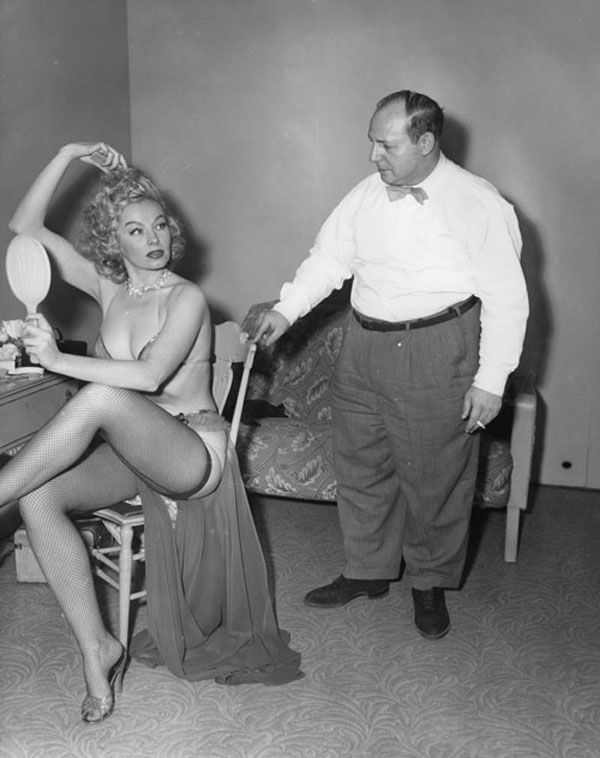
Today, Irving Klaw fetish photography is recognized not as a smut peddler — but as the creator of a visual revolution.
His work paved the way for:
BDSM visibility
queer fetish communities
burlesque revival
drag dominance aesthetics
feminist dominatrix culture
contemporary shibari artists
And ultimately, for fetish to stand proudly as art.

The Blueprint of Kink: Image, Power, and the Birth of Fetish Iconography
Irving Klaw did not simply photograph fetish — he standardized its visual grammar. The corset, the rope, the glove, the stiletto, the commanding pose: these were not random props but recurring symbols that formed a coherent aesthetic language. What appears playful in his images contains the structural DNA of later practices such as Bondage, where restraint becomes visual composition, and Dominance, where posture and costume signal authority before any physical interaction occurs.
His decorative rope work anticipates modern Shibari, not in technical precision, but in the idea that tying can be aesthetic rather than punitive. The bound body in Klaw’s studio was stylized, theatrical, and framed — a precursor to contemporary fetish photography where tension is choreographed for the camera.
The centrality of powerful female figures in his work also echoes the evolution of Femdom and the archetype of the modern dominatrix. Klaw’s Amazons were not background decoration; they were protagonists. This visual inversion of mid-century gender norms laid groundwork for later explorations of Power Exchange, where hierarchy becomes intentional performance rather than social inevitability.
Even the playful exaggeration of his scenarios resonates with Role Play, where narrative and costume construct erotic atmosphere. The studio became a controlled environment — a proto-fetish set — long before dungeon culture was formalized.
Within The Fetish Index, these practices are mapped not as isolated kinks but as interconnected systems of symbol, posture, material, and gaze. Klaw’s legacy reveals that fetish culture did not emerge from abstraction; it emerged from images — repeatable, distributable, codified images that taught viewers how power, restraint, and theatricality could look.
He did not invent desire.
He designed its visual template.
And that template continues to shape the aesthetics of BDSM culture today.
Klaw’s influence does not survive as nostalgia, nor as a fixed historical reference, but as an active visual system that continues to structure how fetish is produced, circulated, and recognized today. What appears in contemporary BDSM imagery — the emphasis on costuming, the deliberate staging of power, the clarity of visual hierarchy between bodies — does not emerge spontaneously, but follows a logic that his studio helped define and stabilize.
The materials themselves carry this continuity. Latex, corsetry, gloves, and high heels do not function merely as adornment, but as coded elements within a shared visual language, one that signals control, role, and intention before any action unfolds. In this sense, fetish fashion is not separate from photography, but inseparable from it, as both operate through the same system of visibility and repetition.
The figure of the dominatrix, now widely recognizable across both subcultural and mainstream contexts, also finds one of its earliest visual consolidations within Klaw’s work, where female power is not implied but staged, exaggerated, and made central. This inversion of normative gender positioning does not simply reflect fantasy, but constructs a framework through which power can be performed, negotiated, and aestheticized.
What extends from this is not only a set of images, but a reproducible structure.
Contemporary fetish photography, digital content platforms, and even algorithm-driven erotic economies continue to rely on the same principles of staging, repetition, and visual codification that Klaw’s mail-order system first distributed at scale.
His work persists, then, not because it is remembered, but because it is continuously reenacted.
Written by Otávio Santiago
Founder of Atomique Fetish — exploring fetish design, power, and identity
Cultural designer & researcher


